
Women are talking about menopause online. Here’s what they’re asking.
Online conversations reveal frustration with providers and persistent gaps in reliable information online.
Online conversations reveal frustration with providers and persistent gaps in reliable information online.
On February 12, the Food and Drug Administration removed the “black box” warning about certain health risks from many menopause hormone therapies. The label had been in place since 2003 and contributed to a dramatic decline in treatment use, even as evidence increasingly suggested the benefits outweigh the risks.
In recent years, the narrative around hormonal menopause treatments has shifted. As concerns about safety declined, demand for these treatments increased sharply.
Despite growing acceptance of treatments, menopause remains widely misunderstood and undertreated. A third of women lack basic knowledge about menopause, two-thirds say it is not discussed openly, and a quarter do not feel comfortable talking about it, even with friends.
More than half of U.S. adults now get health information from social media, including information about women’s health. Social media content about menopause is increasing, but the information is not always accurate or evidence-based. Understanding how people discuss menopause online may help public health professionals identify and target information gaps.
In this analysis, the Infodemiology.com team monitored publicly available online conversations about menopause and perimenopause in the U.S. between January 1 and December 15, 2025. Data were collected from social and digital media, online video platforms, news sites, blogs, forums, Q&A sites, and other web-based sources.
What are menopause and perimenopause?
Menopause is officially defined as 12 consecutive months without menstruation. The transition leading up to menopause, called perimenopause, typically begins in the mid-to-late 40s but may start as early as the mid-30s.
During perimenopause, the ovaries begin to produce less estrogen and progesterone, the hormones that regulate menstruation. These hormonal changes can cause symptoms such as hot flashes, night sweats, mood swings, weight fluctuations, joint pain, and irregular periods.
Hormone therapy—the primary treatment for menopause—replaces hormones the body no longer produces at pre-menopause levels. These therapies are available as pills, patches, sprays, gels, and inserts.
Although more than a third of women report moderate to severe menopause symptoms, less than 20 percent seek treatment.
Where are online menopause conversations happening?
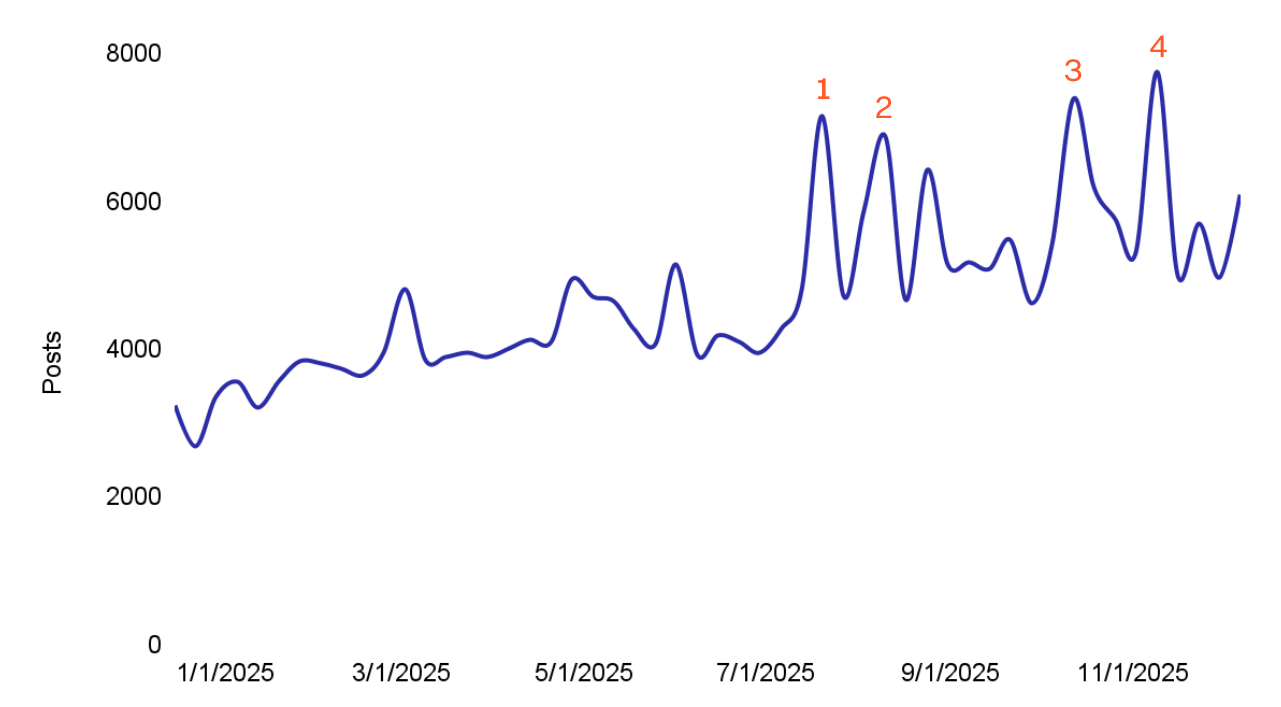
Menopause is a popular topic of conversation online, with nearly two million posts in 2025. About half of all menopause posts (49.6 percent) were on Reddit, and a third (33.2 percent) were on X. TikTok content was not included in this analysis due to platform limitations in accessing raw data.
Spikes in online conversations were largely driven by social media content rather than news coverage. Popular videos and forum discussions generated periodic increases in conversation throughout the year.
Influential Voices
Three content creators consistently appeared in the most highly engaged posts about menopause symptoms. All three primarily post video content.
Two identify themselves as licensed OB-GYNs and frequently reference their clinical expertise in content. One produces educational videos explaining menopause symptoms and treatments, often discussing research studies and recommending products. The second creates more informal videos answering questions from patients in their practice.
The popularity of these creators suggests that health care professionals remain trusted messengers for menopause information online. Responses to their content are generally positive, with many users expressing gratitude for clear explanations.
The third creator uses humor to create an online space where people experiencing perimenopause, menopause, and post-menopause can discuss symptoms, treatments, and frustrations. Many of these conversations focus not only on symptoms but also on how people are trying to manage them.
How are people online talking about menopause symptom management?
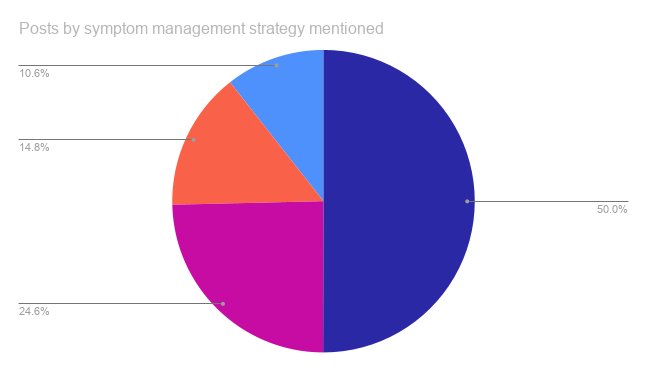
In 2025, half of all menopause posts were about managing symptoms. The most commonly mentioned symptom categories were: menstrual issues, mental health, sleep issues, body temperature regulation, and joint pain.
To better understand how people talk about menopause symptoms, the top symptoms were categorized into themes based on management strategies. Many posts mentioned multiple strategies for managing one symptom. Below are the top four strategies discussed for symptom management.
Treatment type 1: Hormone replacement therapy
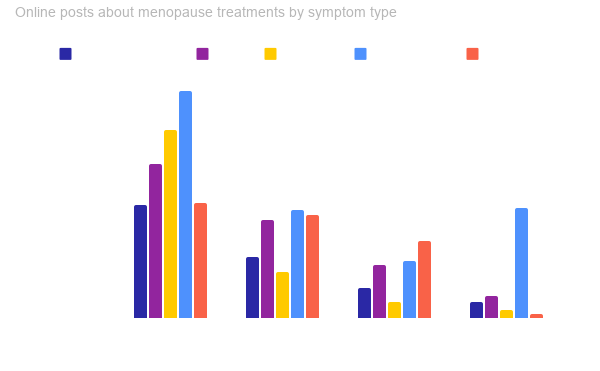
Hormone therapy was the most frequently discussed menopause treatment, mentioned in over 140,000 posts. Mental health symptoms were mentioned most often in HRT-related conversations, followed by menstrual issues, sleep problems, joint pain, and body temperature regulation.
As with general menopause conversations, most HRT conversations took place on Reddit, accounting for nearly two-thirds of posts. Users shared personal experiences with HRT, from talking to health care providers and obtaining prescriptions to managing side effects.
Although many popular posts described positive experiences with HRT, others expressed frustration with providers who downplay symptoms or refuse to prescribe the therapy. One user described visiting five OB/GYNs seeking an HRT prescription before being offered an antidepressant instead.
Online conversations about HRT spiked in November 2025, when the FDA announced it would remove black-box warnings for many hormonal menopause therapies. Some posts suggested that the change would encourage doctors to prescribe the treatments and patients to use them. Others speculated that it would make HRT accessible to more people earlier in menopause, when it is most beneficial.
Treatment type 2: Diet and exercise
Nearly a third of posts about menopause treatments mentioned diet and exercise, most commonly on Reddit and YouTube. These conversations frequently focused on managing mental health symptoms and joint pain. Bone-supporting foods and exercise routines were common topics, with users sharing recipes and workouts to reduce joint pain and support bone health.
Popular posts and videos often promoted magnesium-rich foods and recipes to support bone health. Some commenters expressed appreciation for the information and shared advice for improving bone strength through diet. Posts also frequently discussed modifying recipes to include specific nutrients, such as vitamin-dense fruits and vegetables, as well as chia seeds and flaxseed for fiber and calcium.
Exercise-related menopause content often recommended specific activities, such as walking and weightlifting, to keep bones healthy. The terms “lifting” and “walking” appeared in more than 10 percent of posts about exercise and menopause.
Some people also described their workout routines and exercises to prevent bone density loss and joint pain later in life.
Treatment type 3: Herbs and supplements
Over 41,000 posts mentioned herbal and supplement-based approaches to menopause symptoms. About half focused on managing joint pain, followed by mental health and sleep.
Many posts promoted vitamins and supplements as part of broader symptom-management strategies. Vitamin D was the most frequently mentioned nutrient—referenced in nearly a third of posts—followed by magnesium and collagen.
Content about herbal supplements appeared across platforms more evenly than other treatment discussions. Reddit and YouTube each accounted for roughly 28 percent of posts, while about 16 percent appeared on news platforms.
Popular posts included videos that used humor to advertise specific supplements and testimonials on forums. Users frequently responded to these posts by sharing their stories and asking questions about buying and using the products.
Treatment type 4: Mental health medications
Mental health medications appeared in more than 13 percent of all posts about menopause treatments, primarily in conversations about mental health symptoms. This symptom management strategy was mentioned in 93 percent of posts about mental health symptoms, 19 percent of posts about sleep issues, and 14 percent of posts about body temperature regulation.
The overwhelming majority (79 percent) of conversations took place on Reddit, followed by X at 8 percent.
A recurring theme was the overprescription of antidepressants and a preference among some providers to prescribe SSRIs instead of HRT. One popular post claimed that prescriptions for antidepressants rose following the HRT black box warnings. Commenters often described providers “pushing” antidepressants when they requested hormone therapy. Many found validation and community in discussions online.
Mental health posts focused largely on anxiety and insomnia, with users often discussing the onset of symptoms during perimenopause. One user described the experience as “all of the emotions all at once at full volume.”
Some users with ADHD also reported that menopause affected their ADHD symptoms. Others said ADHD medications appeared to worsen menopause-related issues such as “brain fog.”
Conclusion
Online conversations about perimenopause and menopause provide insight into the information people are seeking, and the gaps they encounter in clinical care and public health communication. Many users turn to online forums because they can’t find reliable information and feel their symptoms are not being taken seriously or adequately addressed by providers.
The dominance of forums and question-and-answer discussions suggests that people are seeking both information and validation from others with similar experiences.
Although interest in hormone therapy is high, many people are also exploring alternative strategies to manage symptoms. This includes supplements, dietary changes, and fitness routines—areas where reliable guidance may be inconsistent.
For public health professionals and clinicians, these conversations highlight a growing demand for accessible, evidence-based information about menopause and how to manage it.